Forget the Feature: Why Linking Up With an Unknown Artist Might Be Your Career's Best Move
Every artist has had the fantasy. You land a feature with someone massive. Their fanbase floods your page, your streams spike, and suddenly the algorithm gods smile down on you. It's a clean story, and yeah — sometimes it works exactly like that.
But here's the thing nobody's really talking about: some of the most compelling, genuinely exciting music being made in the US right now isn't coming from those dream collaborations. It's coming from two artists who met at a local showcase in Atlanta, or a producer in Phoenix who cold-DM'd a singer-songwriter in Portland, or a bedroom beatmaker in Detroit who traded files with a rapper nobody outside their city has heard of — yet.
The big-name feature is a business move. The unknown collaboration? That's where the music actually lives.
Why Ego Gets Quiet When the Room Gets Smaller
There's a dynamic that shifts when neither person in the room has anything to protect. When you're working with a household name, there's an invisible weight to it — their brand, their sound, their people watching. Everyone's being careful. Everyone's performing a version of themselves that fits the moment.
With an emerging artist, that pressure evaporates. Nobody's managing optics. Nobody's worried about whether this fits their rollout strategy. You're just two people trying to make something that feels real.
Producers who've worked across both worlds will tell you the same thing: some of their most creatively free sessions happened with artists who had under 10,000 monthly listeners. Not because those artists were less talented — often the opposite — but because the session had nothing to lose. That freedom is worth more than a lot of people give it credit for.
The Constraint Advantage
There's a concept in creative psychology sometimes called "the paradox of choice" — basically, the more options you have, the harder it is to make a decision, and the less satisfied you are with the one you make. Music works the same way.
When you're working with an established artist, there are a hundred reference points, a dozen producers with opinions, and a legacy to uphold. When you're working with someone who's still building their sound, you're working with constraints. Limited resources. No formula to fall back on. You have to solve problems creatively.
That's exactly how a lot of iconic sounds got born. The lo-fi aesthetic that defined an entire era of indie music didn't come from well-funded studios — it came from artists making do. Constraints force invention. And invention is what makes people stop scrolling.
Case Studies Worth Paying Attention To
You don't have to dig too deep to find examples of this playing out in real time.
Think about the way hyperpop emerged — a genre built almost entirely on artists who were functionally unknown trading production techniques and features before any label came calling. The scene built its own infrastructure through collaboration, and by the time the industry caught up, the sound had already evolved three times over.
Or look at the wave of indie R&B artists who've been quietly stacking critically acclaimed projects by working almost exclusively within tight-knit creative circles — producers and vocalists who grew up on the same Soundcloud feeds, who share a visual language, who push each other in ways that no A&R meeting ever could.
The pattern keeps repeating: artists who prioritize creative chemistry over clout tend to build something with a longer shelf life.
What Fresh Ears Actually Bring to the Table
Here's something that gets underestimated — an artist who hasn't heard every version of your music doesn't have preconceived ideas about what it should sound like. They're responding to what's actually there, not what they expect.
That kind of fresh perspective can crack open parts of your sound you didn't even know were locked. A vocalist who's never heard your production style might approach a melody in a way that sounds completely left-field to you — and completely right to everyone who hears it.
Some of the most interesting songwriting sessions happen when neither person knows exactly what the other is going to do. There's a responsiveness to it, an improvisation. The music becomes a conversation instead of a transaction.
The Practical Side of Reaching Out
Okay, so how do you actually find these people? The good news is the tools are already in your hands.
Spend time on Bandcamp, SubmitHub, and the smaller corners of SoundCloud — not looking for what's already blowing up, but looking for something that makes you feel something. That reaction is data. If a song from an artist with 500 followers genuinely stops you in your tracks, that's a creative signal worth following.
Slide into DMs with specificity. Don't just say "I love your music." Tell them which track, tell them what it reminded you of, tell them what you're working on. Artists at every level respond to genuine engagement because it's rarer than you'd think.
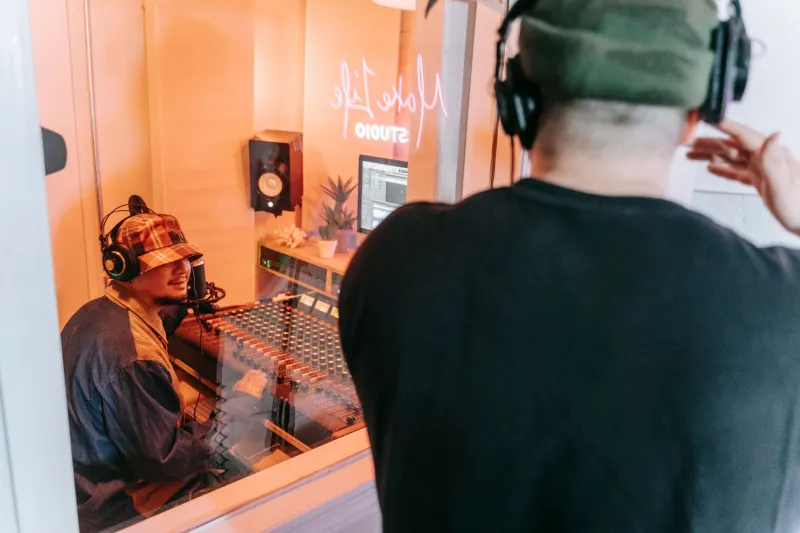
And when you do get in the session — whether it's a shared Google Drive folder or a rented studio for a day — go in without a fixed agenda. Let the session tell you what it wants to be.
The Long Game
Here's the part that might shift your perspective most: the artists you collaborate with now, before either of you breaks through, are the ones who'll remember you when things change. The creative relationships you build from the ground up tend to be the ones that last — and the ones that keep producing work that actually means something.
A feature from a big name might move the needle short-term. A genuine creative partnership with someone who's hungry, talented, and still figuring out their sound? That could define an era of your career.
Where sound meets soul — and that's kind of the whole point of this — it rarely happens in the most convenient places. It happens in the sessions that didn't make sense on paper. In the collaborations that nobody expected. In the music that two people made together before the world had an opinion about either of them.
The unknown artist reaching out to you right now might be the best creative decision you haven't made yet.