When Your Dashboard Lies: What the Data Can't Measure About Your Music Career
Let's start with a number: zero.
That's how many streams "A Case of You" by Joni Mitchell got when it was released in 1971. Because streaming didn't exist. Neither did the concept of a save rate, a monthly listener count, or a skip ratio. There was no algorithm deciding whether Joni's voice deserved to be heard. And yet, somehow, that song has been winding its way into people's chests for over fifty years.
Now ask yourself: if Joni Mitchell were releasing music today and her analytics dashboard showed low initial engagement on that track — too sparse, too slow, high skip rate in the first 15 seconds — would the data have told her to bury it?
Probably. And that's a problem worth examining.
The Seduction of the Dashboard
Let's be fair to the data. Streaming analytics are genuinely useful. Knowing which markets are responding to your music, what playlists are driving discovery, or which track is generating the most saves can help an independent artist make smarter decisions about touring, promotion, and where to focus energy. This isn't an argument against understanding your numbers.
But there's a version of data-driven thinking that crosses a line — and a lot of artists are living on the wrong side of it.
When you start making creative decisions based on algorithmic feedback, you've handed the wheel to a system that was never designed to drive toward artistic meaning. Streaming algorithms are optimized for engagement and retention. Those are legitimate goals for a tech platform. They are not the same as the goals of a human being trying to make meaningful art.
The algorithm doesn't know that your slowest-building track is the one your fans tattoo lyrics from. It just sees that people skip it.
What the Numbers Actually Measure
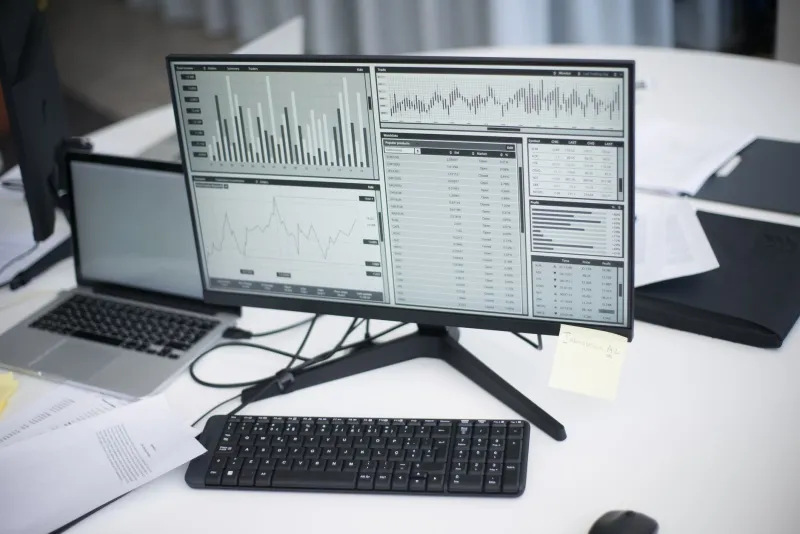
Here's a useful exercise: think about what streaming analytics can and cannot capture.
They can measure: plays, skips, saves, shares, listener demographics, playlist additions, completion rates.
They cannot measure: the person who played your album on repeat during their divorce. The teenager who found your music at 3 a.m. and felt less alone. The fan who drove four hours to see you live because your lyrics felt like they were written specifically about their life. The slow-burn devotion of someone who doesn't stream much but buys every piece of merch you drop.
The most commercially successful artists of the streaming era — the ones whose careers are built on algorithmic optimization — often have enormous listener counts and relatively shallow fan relationships. The artists with smaller but obsessively devoted followings frequently have numbers that look modest by comparison. But ask those artists which fanbase they'd rather have, and the answer is rarely the bigger one.
Deep fandom is almost impossible to quantify. And the things that build it — vulnerability, artistic risk, the willingness to make something strange and specific rather than broadly palatable — often look terrible on a dashboard.
The Artists Who Deliberately Look Away
Some of the most respected figures in contemporary music have talked openly about their complicated relationship with analytics.
There's a pattern among artists who've built genuinely enduring careers: they use data to understand context (where their audience lives, how their music is being found) but they refuse to let it influence content. The song doesn't get rewritten because the skip rate was high. The album sequence doesn't get rearranged because the algorithm prefers shorter tracks. The creative vision stays protected behind a wall that the numbers can't breach.
This isn't naivety. It's a deliberate strategic choice, and it's grounded in a clear-eyed understanding of what data is good for and what it isn't.
Artists who've been in the industry long enough have watched the data-first approach play out repeatedly: an artist chases algorithmic approval, makes increasingly homogenized music, builds a large but disengaged audience, and eventually finds themselves artistically hollow and commercially irrelevant when the algorithm shifts. It's a cycle. And the artists who avoid it are usually the ones who never let the dashboard become the creative director.
The Human Variables That Break Every Model
Here's something that should give every data-driven A&R exec pause: some of the most culturally significant musical moments of the last two decades were statistical anomalies.
Tracks that were ignored on release and then discovered years later. Artists whose first albums barely registered but whose second or third created seismic cultural impact. Songs that performed terribly on radio but became generational anthems through word of mouth and live performance. None of these trajectories would have been predicted — or encouraged — by an analytics dashboard.
Human beings don't experience music the way platforms measure it. We experience it in context — at specific moments in our lives, in specific emotional states, in conversation with memory and identity and longing. A song can mean nothing to you at 22 and become the most important piece of music you've ever heard at 35, because you changed, not the song.
No algorithm models that. No dashboard captures it. And no data-driven strategy can manufacture it.
Finding the Balance
None of this means artists should operate in a vacuum, indifferent to how their work lands. There's a version of "I don't care about the numbers" that's really just fear of accountability dressed up as artistic integrity. That's not what we're advocating for here.
The healthiest relationship with data is one where the numbers inform without controlling. You look at the analytics the way a doctor looks at a patient's chart — it's useful information, it helps you understand what's happening, but it doesn't replace the actual conversation with the person in front of you.
Your gut knows things your dashboard doesn't. Your gut knows when a song is finished versus when it's just done. It knows the difference between a track that's commercially viable and one that's true. It knows when you're making music for your audience versus when you're making music for an algorithm that will never feel anything.
At Cantrell Zwetsch, we believe the soul of music lives in the gap between what can be measured and what can be felt. The dashboard can tell you what happened. It cannot tell you what it meant. And in the long run, meaning is the only currency that doesn't depreciate.