Beyond the Dashboard: What Happens When Artists Stop Checking Their Numbers and Start Feeling the Music Again

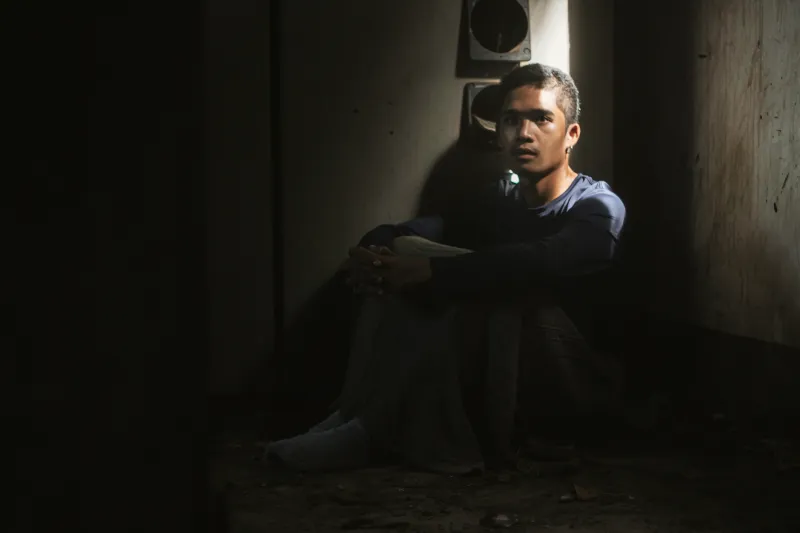
Photo: Kidfly182, CC BY 4.0, via Wikimedia Commons
There's a particular kind of dread that a lot of musicians know but rarely talk about out loud. You finish a song — a real one, the kind that took something out of you to make — and before you've even let yourself feel good about it, you're refreshing Spotify for Artists. Watching the stream count. Checking saves. Reading the skip rate like it's a verdict.
The music that felt like everything an hour ago is now a data point. And somehow, it feels smaller.
This isn't a new problem, but it's an intensifying one. The tools that were supposed to empower independent artists have, for a significant number of them, quietly become a source of chronic anxiety that chips away at the very thing that made them want to create in the first place.
The Optimization Trap
Here's how it usually starts. You're an independent artist trying to build something real. Someone tells you — correctly — that understanding your data is part of running a music career like a business. So you start paying attention. You notice that shorter intros do better. That certain tempos get more saves. That releasing on Fridays outperforms Tuesdays.
And gradually, without really deciding to, you start writing for the dashboard instead of for yourself.
The songs get a little safer. The intros get shorter. The weird detour in the bridge that you loved gets cut because it might spike the skip rate. The music is still good, maybe. But it's optimized. And optimization is the enemy of soul.
One songwriter described it this way: "I looked back at my last three projects and realized I could see the algorithm in every decision I made. The songs weren't bad. But they weren't mine anymore. I'd been making music for a machine without realizing it."
What the Data Can't Measure
Here's what no dashboard tells you: why someone played your song at their dad's funeral. Why a teenager in Ohio found your record at 2 a.m. and felt less alone. Why a couple dances to your song every anniversary.
Streaming metrics measure consumption. They don't measure connection. And for most artists, connection is the whole point — the thing that made you pick up an instrument or sit down at a keyboard in the first place. The moment you let consumption metrics stand in for connection, you've accepted a substitution that will eventually hollow out your work.
This isn't an argument against understanding your data. It's an argument against letting your data understand you.
The Sabbatical as Creative Reset
A growing number of artists are responding to metric fatigue with a deliberate, structured break from analytics — not from making music, but from measuring it.
The approach varies. Some go dark on their dashboards for a month at a time, releasing music without checking numbers for the first several weeks. Others take longer creative sabbaticals, spending time making music with no release plan attached — songs that exist just to exist, with no audience in mind.
What artists consistently report on the other side of these breaks is a return to the physical sensation of making music. The feeling of a chord that surprises you. The satisfaction of a lyric that finally says the exact right thing. The stuff that drew you in before there was anyone watching.
"I took ninety days off from looking at any of it," one indie artist told us. "I wrote about forty songs in that window, and maybe five of them are releasable. But those five are the best things I've made in years. Because I wasn't writing for anyone except myself."
Journaling as a Return to Intention
One of the most consistently recommended tools among artists navigating this recalibration is also one of the least glamorous: journaling. Not about the music industry, not about goals and strategy — about why.
Why did you start making music? What was the first song that made you feel like music was the thing? What does it feel like when a song is working, before anyone else has heard it? What are you actually trying to say, when you strip away everything about how it'll be received?
These questions sound simple. Sitting with them is harder than it sounds, especially if you've spent years training yourself to think about music in terms of performance metrics. But artists who do the work of returning to their original "why" consistently describe it as a reorientation — a way of remembering what the compass is actually supposed to point at.
Some keep a dedicated music journal, separate from anything business-related, where the only rule is that nothing in it can be about results. It's a space for the pre-metric version of themselves — the one who made music because the alternative was unthinkable.
Rebuilding the Human Connection
Another strategy that's gained traction is a deliberate shift toward direct, low-scale human engagement. Instead of watching stream counts, some artists are spending that energy on the fans they can actually reach — responding to DMs, doing small listening sessions, playing house shows or intimate venue sets where the feedback is a room full of faces instead of a graph.
There's something recalibrating about playing a song for thirty people and watching them react in real time. It's data, in a sense — but it's the kind of data that reminds you what music is actually for. You can't misread a room the way you can misread a skip rate.
The Metric That Actually Matters
None of this means ignoring your career or pretending the business side doesn't exist. It means keeping it in its lane.
The artists who seem to sustain the longest, most creatively alive careers are the ones who treat metrics as a tool they pick up and put down, rather than a lens they look through constantly. They understand their numbers well enough to make smart decisions. And then they go make music that has nothing to do with those decisions.
At Cantrell Zwetsch, we believe in the place where sound meets soul — and that place doesn't have a dashboard. It doesn't have a skip rate. It has a feeling, and that feeling is the whole reason any of this matters.
The numbers will tell you how many people showed up. They'll never tell you why it moved them. That part is still yours, if you decide to protect it.